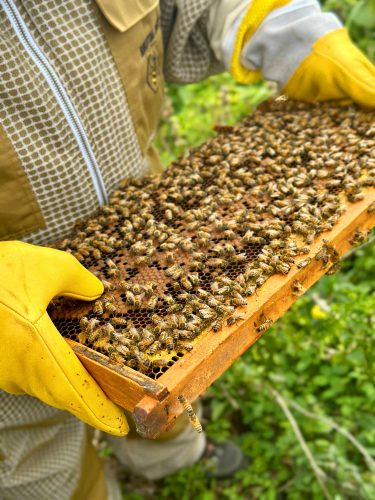
Honeybees play a vital role in our ecosystem pollinating over 130 different fruits, vegetables, seeds, and nuts for us to enjoy. Since plants are rooted to the ground, they must rely on pollinators to transport pollen from flower to flower to reproduce. Without honeybees and other pollinators, we would not be able to enjoy foods such as apples, strawberries, potatoes, and avocados just to name a few.
Here are 5 primary ways in which you can support pollinators in your backyard and beyond:
Grow a bee-friendly garden. You can help provide more habitats by planting bee-friendly flowers. Bees especially enjoy nectar from lemon balm, borage, lavender, zinnia, and sunflowers. Bees also like visiting flowers from medicinal and culinary herbs including comfrey, sage, thyme, oregano, rosemary, and mint. Feed pollinators and then harvest them for your kitchen – a win-win for you and the bees!
Avoid using chemical pesticides. Pesticides contain chemicals called neonicotinoids that are toxic to bees (and humans!) and are considered one of the leading causes of bee death. Instead of spraying pesticides, learn about natural pest control methods such as neem oil, companion planting, and simple natural pest control sprays made from vinegar, salt and soap.
Support local beekeepers. It is best to buy honey from a beekeeper at your local farmer’s market or farm stand rather than purchasing imported honey from chain stores which can be questionable in its authenticity. Beekeepers on small-scale honey farms tend to use more natural beekeeping practices and do not adulterate their honey for profit. Consuming local honey is also beneficial to those with allergies as it helps fight pollen sensitivity from the inside out.
Provide a bee watering station. A beehive will need at least a quart of water every single day to survive. During the summer and times of drought it can be helpful for bees to have more sources for water. You can help supply water to bees by simply placing a few rocks into a dish and then filling it with water. The rocks give the bees something to land on so they can use their tongue-like structure called a proboscis to slurp up the water to rehydrate themselves and take excess water back to the hive.
Learn more about bees. It is important to educate your children and family about the importance of pollinators. The future of our planet will depend on decisions made by the future generations. Learning about honeybees along with a beekeeper or honeybee advocate will be an experience a child will never forget and will empower them to take actions to support pollinators in the future.
Any small step you can take to help preserve these important pollinators will go a long way for the betterment of our planet and our stomachs.
Erica Erickson started Maui Honey Bee Sanctuary in 2015. Learn more at www.mauihoneybees.com.